regulation
Defra opens consultation on tougher timber due diligence rules for Great Britain
The government is consulting until 17 January 2027 on mandatory due diligence for timber and six other commodities, alongside measures to strengthen the UK Timber Regulation that has applied in Great Britain since 2021.
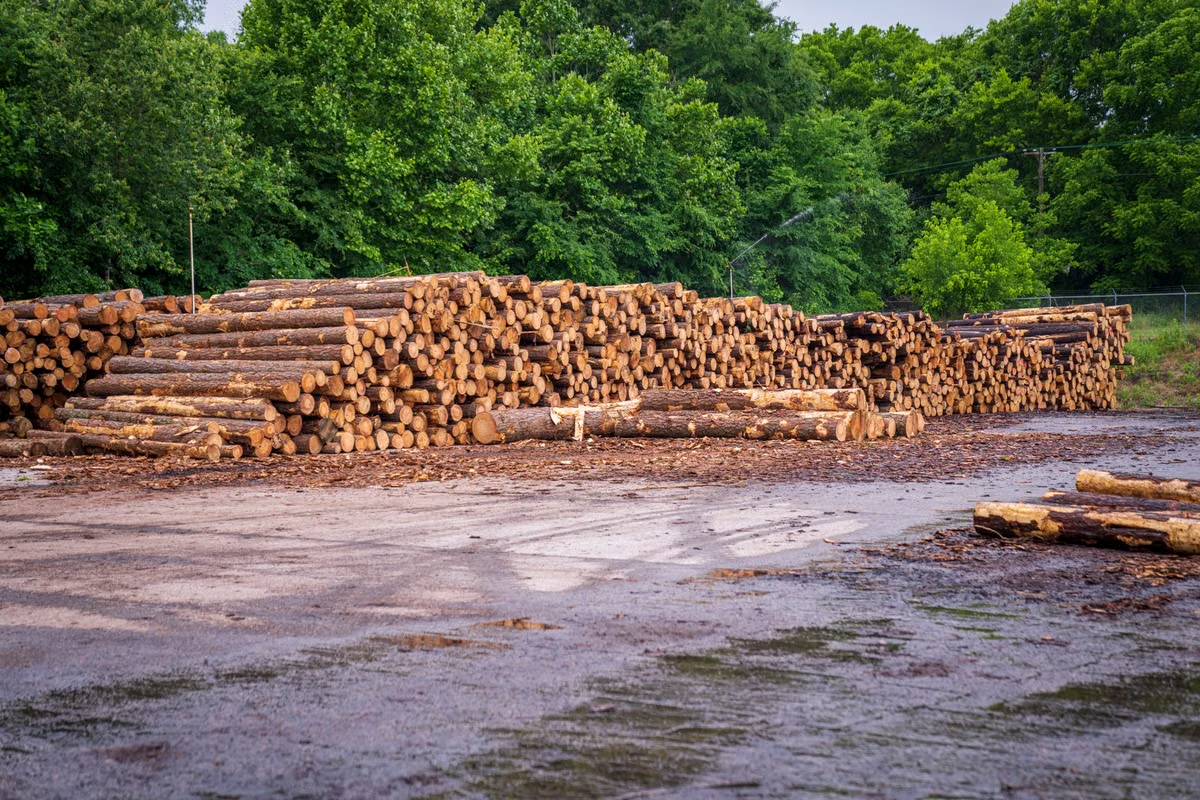
The Department for Environment, Food and Rural Affairs (Defra) has opened a consultation on mandatory supply chain due diligence for timber and six other forest-risk commodities in Great Britain, with measures to strengthen the UK Timber Regulation.
The consultation, launched on 11 November, covers businesses using coffee, cocoa, cattle, soy, oil palm, rubber and timber, or products derived from them. Defra said the proposals would require those businesses to assess their supply chains and ensure they are not driving illegal deforestation overseas.
Responses are due by 11:59pm on 17 January 2027. In a separate policy paper, Defra said it aimed to require businesses in Great Britain with an annual turnover of more than £1m to carry out due diligence, and that it expected legislation to implement the regime to be delivered in 2027.
Environment Secretary Dame Angela Eagle said: "This government is determined to stamp illegal deforestation out of UK supply chains for good and show global leadership on tackling the climate and nature crises."
The proposals
Defra said the consultation would include proposals for mandatory due diligence obligations under existing powers, including those in the Environment Act 2021, as well as measures to strengthen the UK Timber Regulation (UKTR).
The UKTR has applied in Great Britain since 1 January 2021, according to GOV.UK guidance. Under it, operators must not place illegally harvested timber on the GB market, and traders must keep records of who they buy timber or timber products from and any traders they sell them to. The Office for Product Safety and Standards (OPSS) is appointed by Defra to enforce the regulations in Great Britain and Northern Ireland.
The announcement came as senior politicians from around the world gathered for a Leaders' Summit Event on Forests at the COP31 climate conference in Antalya. Defra said the proposals would help the UK deliver on the commitment made with 144 other countries at COP26 in Glasgow to halt and reverse forest loss and land degradation by 2030, and that its longer-term ambition was to move towards a deforestation-free standard.
The department first signalled the consultation on 23 June 2026, when it said it planned to strengthen the existing UKTR and that the GB regime would cover the same core commodities and underlying information requirements as the regulation in Northern Ireland.
Nature Minister Mary Creagh CBE MP said in June: "Tackling global deforestation is one of the most effective ways we can address climate change".
Northern Ireland
Timber businesses in Northern Ireland face a separate and earlier timetable. Defra said the EU Regulation on Deforestation-Free Products (EUDR) will begin applying in Northern Ireland in phases from 30 December 2026, with large and medium operators required to follow the rules from that date. OPSS will act as competent authority for rubber and wood products.
GOV.UK guidance on the EUDR says operators must collect the geolocation of all plots where the commodities in a product were produced. For wood, they must also record the common name of the species and its full scientific name.
Defra said it was seeking to ensure the GB regime operated alongside the Northern Ireland regime to reduce unnecessary administrative burdens and protect the UK internal market.
The footprint figures
Defra said UK consumption of goods associated with deforestation in 2023 was linked to about 29,000 hectares of deforestation worldwide and 9.4m tonnes of carbon emissions.
The figures match the Joint Nature Conservation Committee's (JNCC) global biodiversity impact indicator, which estimates UK consumption of crops, cattle-related commodities and timber in 2023 was associated with 29,000 hectares of agriculture-driven deforestation. JNCC said this compared with 65,000 hectares in 2005, when the time series began, and 48,000 hectares in 2018.
| Year | UK deforestation footprint (hectares) |
|---|---|
| 2005 | 65,000 |
| 2018 | 48,000 |
| 2023 | 29,000 |
Source: JNCC
What happens next
The consultation seeks views from businesses, environmental organisations and international stakeholders, Defra said, and closes on 17 January 2027. Defra expects legislation for the Great Britain regime in 2027, while the EUDR starts applying in Northern Ireland from 30 December 2026.
Sources
- Department for Environment, Food & Rural Affairs (GOV.UK) (opens in a new tab) (accessed 2026-11-11)
- Department for Environment, Food & Rural Affairs (GOV.UK) (opens in a new tab) (accessed 2026-11-11)
- Department for Environment, Food & Rural Affairs (GOV.UK) (opens in a new tab) (accessed 2026-11-11)
- Department for Environment, Food & Rural Affairs (GOV.UK) (opens in a new tab) (accessed 2026-11-11)
- GOV.UK (opens in a new tab) (accessed 2026-11-11)
- GOV.UK (opens in a new tab) (accessed 2026-11-11)
- Joint Nature Conservation Committee (opens in a new tab) (accessed 2026-11-11)
This story was researched from the primary sources above and checked against them before publication. Spotted an error? Tell us and we will correct it promptly.